




How a turnover repaint works in an empty Fort Lauderdale apartment: walkthrough, lead rules, prep, painting, and what to have ready before the crew arrives.
Apartment painting between tenants in Fort Lauderdale is a turnover repaint done while the unit is empty, so the crew can work without furniture, residents or a move-in date pressing in. We paint apartments as part of our commercial work, and a sound turnover job starts with a walkthrough, a written scope and a lead-rule check before anyone sands a wall.
How a Turnover Repaint Works, Stage by Stage
Every unit is different, so we do not quote a single timeline for all of them. The length of each stage depends on how much patching the walls need, how many rooms are involved and how many units are being turned at once. Our free estimate and itemized quote with no hidden fees set that out for your property in writing.
| Stage | What happens | What you prepare |
|---|---|---|
| Walkthrough and estimate | We look at walls, ceilings, trim and doors in the empty unit and note stains, holes, moisture marks and anything that needs repair first. | Access to the unit, the move-out date and any color standard your property already uses. |
| Lead-rule check | We confirm whether the building's age and the planned work trigger federal lead-safe requirements before the scope is final. | Building age and any past lead information you hold. |
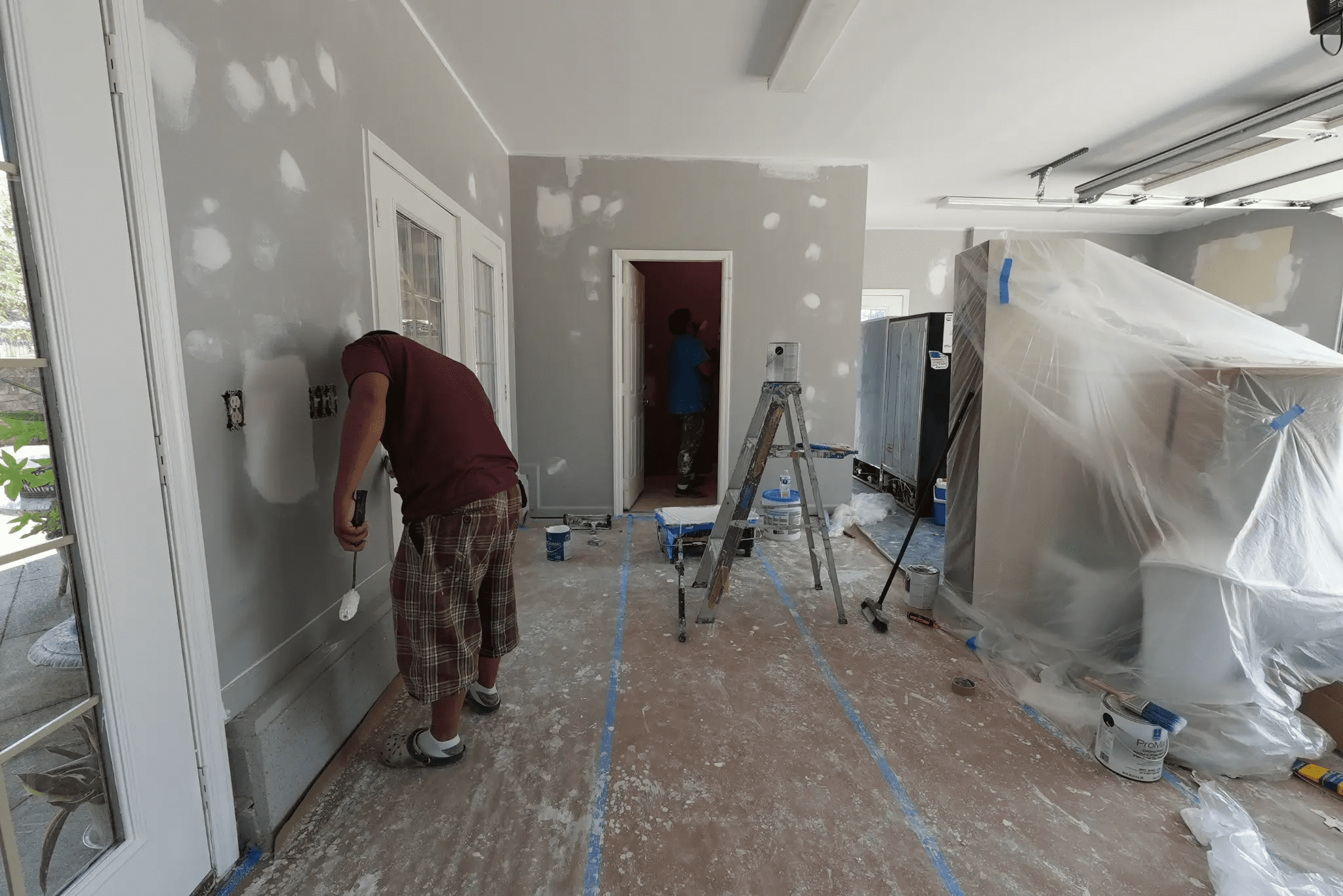
| Protection and prep | Floors and fixtures are covered, holes and cracks are filled, glossy or dirty surfaces are cleaned and sanded, and stained spots are sealed with primer. | Remove leftover belongings, and tell us about any known leaks. |
| Painting | Primer where needed, then finish coats using Sherwin-Williams premium paints on walls, ceilings, trim and doors as scoped. | Keep the unit locked and free of other trades during coating. |
| Final walk and cleanup | Together we check coverage, edges and touch-ups, then the unit is cleaned up and handed back. | Someone with authority to sign off on the unit. |
What Good Turnover Work Looks Like
- Even coverage under daylight and under lamp light, with no roller marks, flashing or lap lines.
- Patched holes that disappear: filled, sanded flush and primed so they do not show through the finish.
- Water stains and smoke or nicotine marks sealed with primer instead of covered with wall paint alone, since they can bleed through.
- Crisp lines at ceilings, trim and door frames, and no paint on hinges, outlets or floors.
- Scuffs, anchors and dents from the last tenant repaired, not just painted over.
Stains are the usual place where a rushed turnover fails. If the cause of a stain, such as a slow leak in a Fort Lauderdale humid summer, has not been fixed, fresh paint will only hide it for a while. We flag those spots during the walkthrough so maintenance can deal with the source first.
The Lead Rule Does Not Skip Vacant Units
Many managers assume an empty apartment is exempt from lead-safe rules. The EPA says otherwise: in its answer on whether the RRP Rule applies to renovations between tenants, it states that temporarily unoccupied or vacant rental housing is not exempt from the rule's requirements. That matters when a turnover includes sanding, cutting or disturbing older paint.
The EPA's guidance for renters adds two notice duties. According to the EPA's Renovation, Repair and Painting Program page for renters, firms doing renovation work must give occupants the Renovate Right pamphlet no more than 60 days before work begins. For work in common areas of multi-family housing, the firm must either distribute renovation notices or post informational signs where the occupants of all affected units are likely to see them. The notice must describe the nature and location of the work, the expected start and end dates, and how to get the pamphlet at no cost.
The same EPA page warns that sanding, cutting and window replacement can create hazardous lead dust and chips. So on a building of older vintage, we raise the question at the estimate, not on the day the sanders come out. The EPA also answers a common shortcut question: in its FAQ on tenants repainting for free, it says the rule applies only to renovations performed for compensation. A paid contractor falls on the covered side of that line, and the scope should reflect it.
Why Repainting at Turnover Is Normally the Landlord's Cost
Property managers often ask who pays for the paint. Florida security deposit commentary is fairly consistent. About Florida Law's explanation of normal wear and tear says paint fades and gets dirty over time, that this is not caused by a tenant, and that a landlord should freshen up an apartment with a new coat of paint whenever a new tenant moves in. It also describes a Broward County case where a tenant won after a landlord deducted interior painting, among other items.
Damage is a different matter. The Korte law firm's wear-and-tear versus damage guide lists faded paint and minor wall scuffs as ordinary wear, and separates them from harm caused by negligence, accidents or abuse. For a manager, the practical point is documentation: photograph the unit at move-out, and keep the scope and itemized quote that separate routine repainting from repair of real damage. We are a painter, not a law firm, so have your attorney confirm how this applies to a specific deposit.
Deposit Deadlines That Shape Your Repaint Schedule
The deposit clock is why many managers want the repaint booked early. As summarized by CrossView Property Management's Florida landlord guide, a landlord returning the full deposit must do so within 15 days after the tenant vacates, and one intending to make deductions must send written notice within 30 days. If that notice is late, the tenant is entitled to the full deposit. Any damage repair you plan to claim should therefore be inspected and priced inside that window, which a prompt walkthrough makes possible.
Getting a Turnover Done Without Losing Days
- Book the walkthrough as soon as notice of move-out arrives, not after the keys are returned.
- Fix leaks, repair drywall and finish other trades before painting, so nobody scuffs fresh walls.
- Pick one color standard across units so touch-ups match later.
- Send us the building's age and any lead information you have.
- For buildings that stay occupied, ask us about night and weekend scheduling, which we offer on commercial work.
If you manage a larger community, our apartment repaint plan for Fort Lauderdale covers scoping around residents and association rules, and our guide to hiring commercial painting contractors covers how to compare bids. To start a unit-by-unit estimate, call (754) 218-9744 or use the form on our website, and an estimator will call you back.
FAQ
Do you paint apartments between tenants?
Yes. Apartment painting is part of our commercial work for multifamily properties, and every job starts with a free estimate and an itemized quote with no hidden fees.
Can the tenant be charged for the repaint?
Sources on Florida deposit law describe ordinary fading and scuffs as normal wear and tear, which generally cannot be deducted. Damage beyond that is treated differently. Check specific cases with your attorney.
Is the work covered by a warranty?
Yes. Our work carries a written warranty on labor and materials, and the details are set out in your agreement.
Does an empty unit still fall under the EPA lead rule?
Yes, it can. The EPA states that temporarily unoccupied or vacant rental housing is not exempt from the RRP Rule, and its question on this topic also asks whether children in other apartments matter, which is a reason to treat the whole building's notice duties seriously instead of assuming a vacant unit is a free pass.
Related resources
- Apartment Repaint in Fort Lauderdale: Commercial Painting Plan
- Hiring Commercial Painting Contractors in Fort Lauderdale
- Cabinet Painting Cost Fort Lauderdale
- Cabinet Painting Fort Lauderdale
- Best Time for Exterior Painting in Fort Lauderdale, FL
- Commercial Exterior Painting in Fort Lauderdale: Scope and Prep