
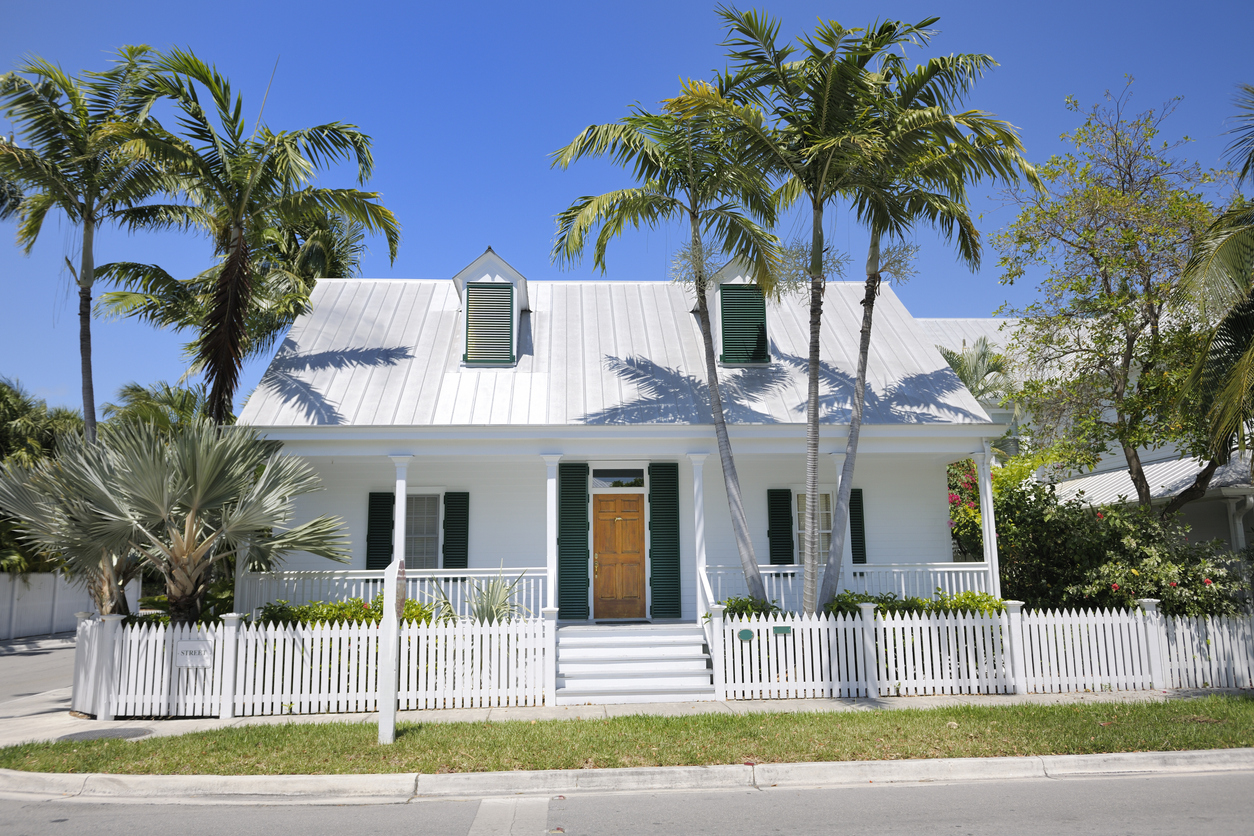

The best exterior paint for South Florida is a UV- and mildew-resistant coating applied over thorough, salt-removing prep. Here's what holds up on stucco, brick, and smooth surfaces in Fort Lauderdale, Pompano Beach, and Boca Raton.
Commercial exterior painting means repainting and protecting the outside of an office, retail, or apartment building — usually because stucco is chalking, paint is peeling off block or metal, or caulking has failed around windows and doors. In South Florida, sun, humidity, and storm exposure accelerate all three problems faster than in most other markets, so a building that looks fine from the parking lot can already have failing caulk joints or hairline stucco cracks letting water in.
What Peeling or Chalking Paint on a Commercial Building Usually Means
When paint on an office or retail building starts to chalk (a powdery residue on your hand when you touch the wall), fade unevenly, or peel at the edges, it's rarely just cosmetic. Chalking is UV breakdown of the paint's binder — the resin that holds pigment to the surface is degrading under Fort Lauderdale's sun exposure. Peeling, especially near rooflines, window frames, or expansion joints, usually points to moisture getting behind the film, either from a cracked seal or from paint that was applied over a damp or dirty surface in the first place.
Bubbling or blistering in low areas or near downspouts often means water intrusion from the inside out, not the outside in — a plumbing or roofing issue pushing moisture through the wall. That's a different repair path than a simple repaint, and it's worth ruling out before any paint goes back on.
Likely Causes, Most to Least Common
- UV and heat breakdown: Constant South Florida sun degrades lower-grade paint films within a few years, especially on south- and west-facing walls.
- Moisture behind the film: Cracked stucco, failed caulk at windows/doors, or block walls that were never properly primed let humidity and rain get under the paint, causing peeling and blistering.
- Poor surface prep on the original job: Paint applied over dirt, mildew, or unpatched cracks never bonds properly, so it fails early no matter how good the paint itself was.
- Wrong product for the substrate: Stucco, block, and metal trim each need different primers and coatings; using an interior-grade or all-purpose paint outdoors in this climate shortens its life.
- Storm and salt-air exposure: Wind-driven rain and salt air near the coast accelerate wear on paint film, particularly on buildings closer to the water.
Safe Checks a Property Owner or Manager Can Do
- Walk the perimeter and press a fingertip against faded or dull-looking walls — a chalky white residue means UV breakdown of the paint film.
- Look closely at caulk lines around windows, doors, and expansion joints for cracking, gaps, or places where caulk has pulled away from the surface.
- Check for peeling concentrated near rooflines, downspouts, or low walls, which often signals a moisture source rather than simple age.
- Note whether cracks in stucco are hairline (cosmetic) or wide enough to see daylight or feel with a fingernail (structural and worth flagging to a contractor).
- Photograph problem areas in daylight so you have a record to share when getting an estimate.
What a South Florida Commercial Exterior Repaint Involves
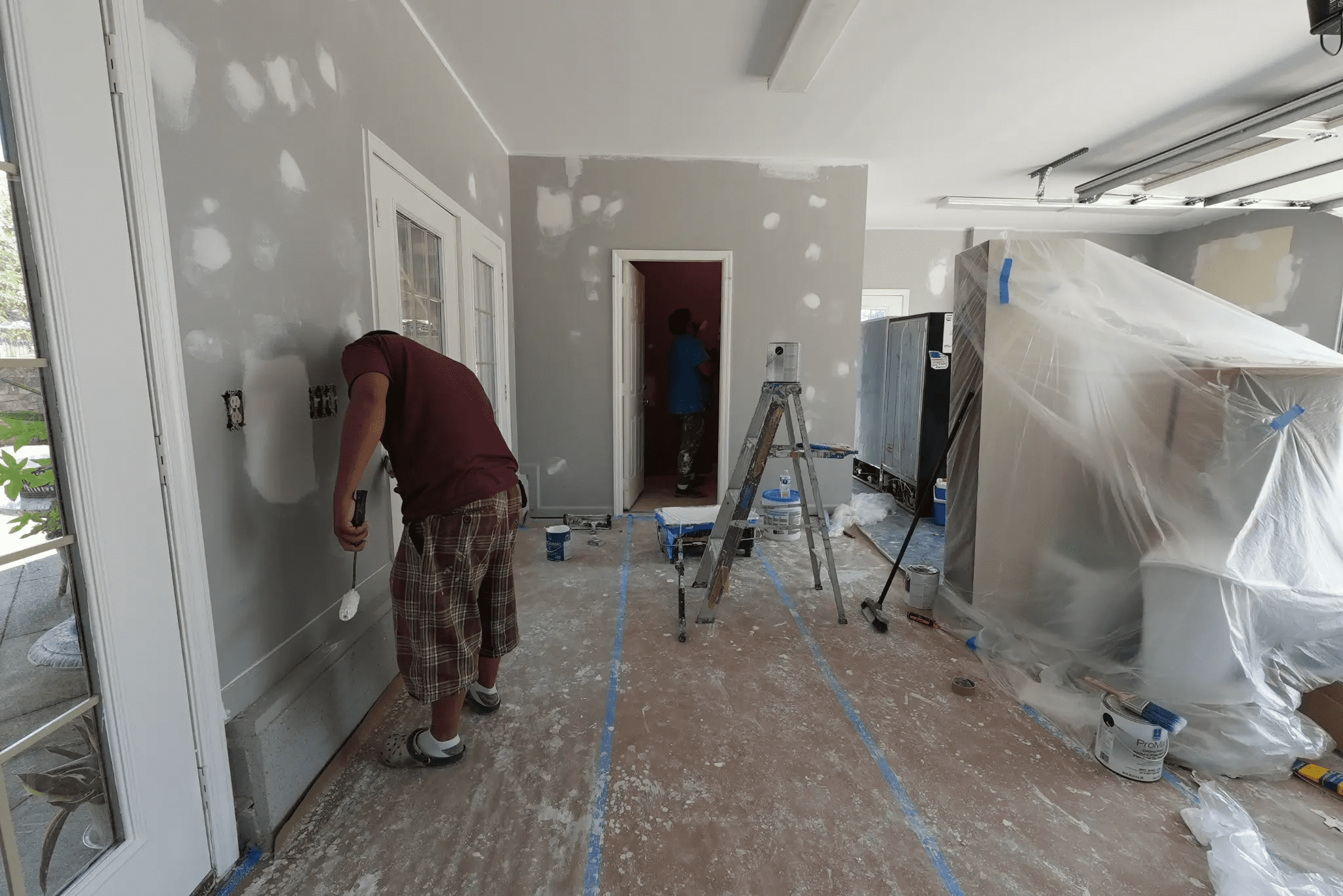
A proper repaint on a Broward or Palm Beach commercial building starts with pressure washing to strip off dirt, mildew, and loose, failing paint. From there the crew fills cracks, patches stucco and block, scrapes any remaining loose material, and primes bare or repaired spots before a coat of paint goes on. PaintPro South Florida applies commercial exterior painting using Sherwin-Williams premium paints selected for South Florida's heat, humidity, UV exposure, and storm season, on stucco, brick, and smooth surfaces alike. Skipping any of these prep steps is the most common reason a repaint fails again within a couple of years.
Phasing Around Business Hours
Because the building is occupied — tenants, customers, or staff coming and going — commercial exterior work is scheduled to minimize disruption, often working around business hours rather than shutting down access. Retail storefronts, apartment buildings, and office parks each have different traffic patterns, and a contractor familiar with commercial painting for these property types should plan the sequence of the job around them rather than asking a business to work around the painters.
Timing Around Storm Season
South Florida's wet season and storm activity affect both scheduling and dry time. Humidity slows paint cure between coats, so rushing a second coat onto a still-damp wall is a common cause of early failure. A contractor working in this climate should plan extra dry time between coats rather than compress the schedule, and should watch the forecast closely before starting exterior work.
What a Detailed, No-Hidden-Fees Estimate Should Itemize
Before hiring anyone for a repaint, ask for a written estimate that breaks the job into clear line items rather than one lump number. A transparent estimate should itemize surface preparation (pressure washing, crack filling, patching, priming), the specific paint product and finish for each surface type, the number of coats, and the payment schedule. PaintPro South Florida provides a free estimate with a detailed cost breakdown and no hidden fees for every project, whether it's a single retail storefront or a multi-building apartment complex.
How to Vet Commercial Painting Companies
With so many commercial painting companies advertising in South Florida, a short checklist separates a reliable local contractor from a rushed job. Confirm the company is licensed and insured, ask whether the warranty is written and covers both labor and materials, and request an itemized estimate rather than a verbal quote. A locally owned contractor that stands behind a written 2-year warranty on labor and materials — the standard PaintPro South Florida applies to all projects — gives a property owner more direct accountability than a quote that skips the details.
Commercial Exterior Painting FAQ
How long does a commercial exterior repaint take?
Timelines depend on the size of the building and how much prep work — patching, crack filling, priming — is needed. Larger commercial jobs take several days; scheduling is planned around business hours to minimize disruption to tenants or customers.
What paint holds up best on South Florida commercial buildings?
A quality, UV- and mildew-resistant coating applied over thorough surface preparation performs best against South Florida's sun, humidity, and storm exposure. PaintPro South Florida uses Sherwin-Williams premium paints selected for these conditions on stucco, brick, and smooth exterior surfaces.
Does painting happen during business hours?
Commercial exterior work is scheduled to minimize disruption to daily operations, working around occupied offices, retail storefronts, and apartment buildings rather than requiring a full shutdown.
What should be included in a commercial painting estimate?
A detailed estimate should itemize surface preparation, the paint products and number of coats for each surface, and the payment schedule, with no hidden fees. PaintPro South Florida provides this breakdown as part of every free estimate.
Is a warranty standard on commercial exterior painting?
If you're weighing a commercial repaint, a clear, itemized estimate is the best place to start. Reach out to PaintPro South Florida to schedule your free estimate and get a straightforward look at what your project involves. It's an easy first step toward a building exterior that holds up to South Florida's climate.
Related resources
- Commercial Exterior Painting Fort Lauderdale | Paint Pro South Florida
- Commercial Interior Painting Fort Lauderdale | Paint Pro South Florida
- Commercial Painting Fort Lauderdale, FL | Paint Pro South Florida
- What Is the Best Exterior Paint for South Florida Homes?