



Learn how to prepare stucco for exterior painting in Coral Springs, including mildew treatment and crack repair. Discover local color rules and how to choose the right paint for the humid climate.
Prepare your Coral Springs stucco by pressure-washing, treating mildew, patching cracks, and priming chalky areas before applying a breathable acrylic or elastomeric coating suited to the humidity. Submit a no-cost paint application to the City of Coral Springs to confirm your color is within the approved palette before work begins.
Exterior painting services for Coral Springs homeowners
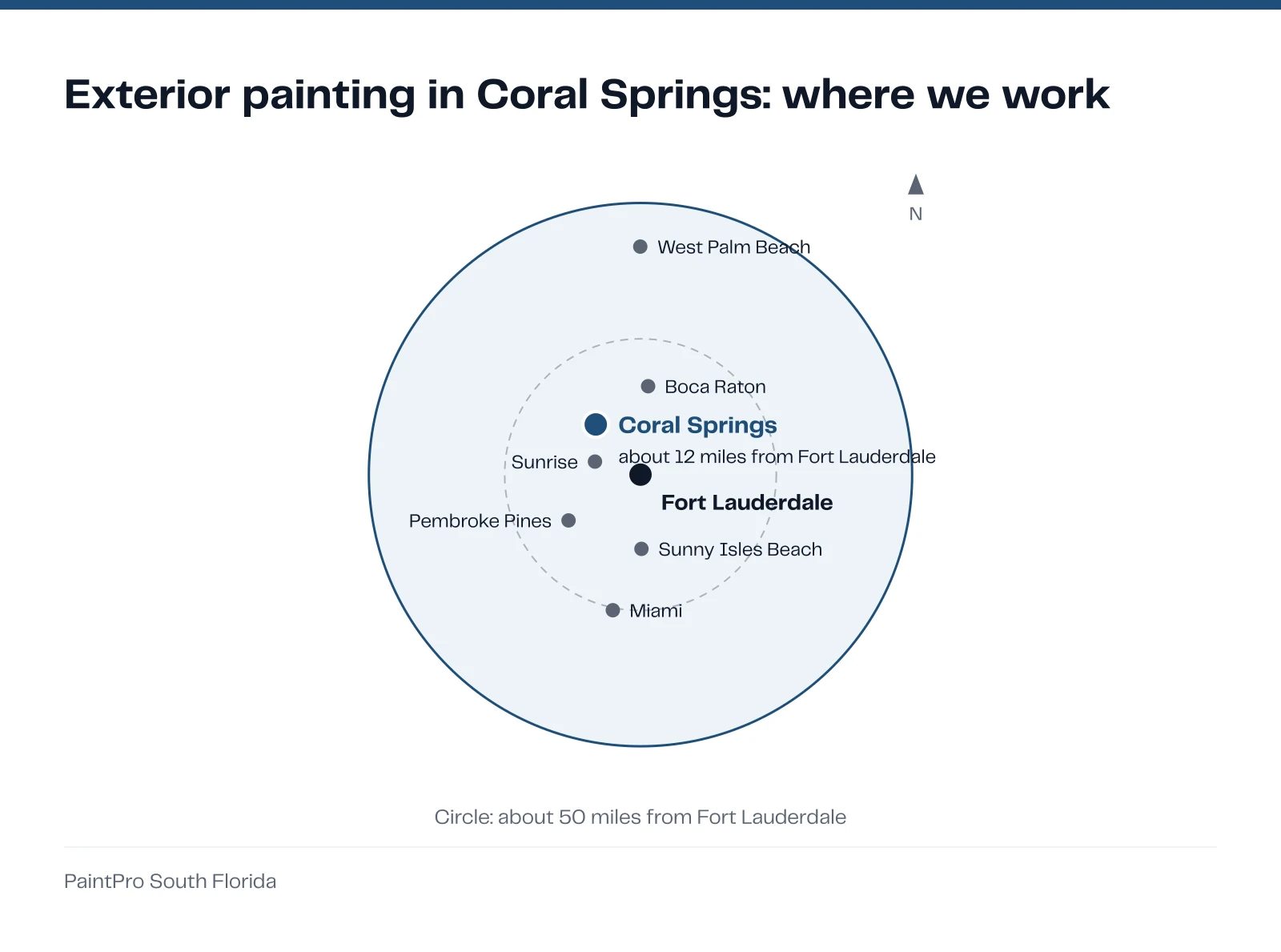
PaintPro South Florida provides licensed and insured residential exterior painting on stucco, brick, and smooth surfaces, serving homeowners and HOA owners who need materials for board submittals. Our crews handle residential exterior work, including pressure-cleaning, treating mildew, filling cracks, scraping loose paint, and priming chalky stucco. We focus on the specific challenges of the Fort Lauderdale metro area, where heat, humidity, and salt air accelerate the wear on exterior finishes.
For single-family homes, we manage the technical prep required to make paint adhere to porous stucco. This includes priming chalky stucco. We also treat mildew. For HOA and condo properties, we provide color samples, photos, and quotes that owners can submit to their boards. This ensures the project meets both city guidelines and community standards.
The service covers residential exterior surfaces, including stucco, brick, and smooth surfaces. We adjust our approach based on the building's exposure to canal-front splash or irrigation rust stains. By handling every aspect of the project, we ensure the finish lasts through the local storm cycle. This comprehensive approach helps homeowners avoid the early peeling and fading common in drier climates.
How to prepare stucco before repainting
Prep involves pressure-washing to remove dirt and mildew, treating biological growth, filling cracks, and priming chalky stucco to ensure the new paint bonds properly. Stucco is a rigid material prone to cracking, so most repainting jobs require significant patching before the first coat goes on. Pressure washing is the most effective method for cleaning the surface, but you must aim the hose away from windows to avoid damage. If mildew is present, a household cleanser designed to kill mold is necessary to eliminate the existing growth.
Crack repair depends on the size of the damage. If a credit card fits into a crack, you should open it up, prime it, and patch it properly. For larger cracks, use a material that matches the texture of your stucco. After making these repairs, wait seven to ten days before painting old stucco to allow the patches to cure. If the stucco is new, wait at least 60 days before applying any paint.
Chalky surfaces need special attention because the loose powder prevents adhesion. You must scrape away the chalky layer and apply a primer to create a sound base for the topcoat. The surface must be completely dry before painting, with moisture content not exceeding 12%. Because stucco has a rougher texture with more grooves, it may require upwards of 30 to 50 percent more paint than usual. Proper preparation is critical, as insufficient prep is the cause of the majority of painting failures.
Choosing the right paint for a hot, humid climate
Elastomeric coatings offer superior flexibility for stucco in high-heat areas, while premium acrylics provide a cost-effective, breathable option for standard residential exteriors. The choice depends on the condition of your walls and their exposure to the elements. For standard residential stucco, a quality masonry primer provides the foundation for a coating system that withstands extreme conditions. This primer helps separate the stucco from the finish coat, improving coverage and reducing moisture draw.
When selecting a topcoat, consider the specific needs of your substrate. Stucco cracks will telegraph through the topcoat, so they must be repaired with patches and sealants prior to repainting. For the finish, you can use two coats of a standard exterior paint or one coat of a higher-performance product. Elastomeric coatings are particularly useful for commercial buildings or homes with significant stucco movement, as they bridge small cracks and provide a thicker protective film.
In the Fort Lauderdale metro area, salt air and storm exposure wear down finishes faster than in drier climates. This is why the prep work matters as much as the paint itself. A breathable acrylic paint allows moisture to escape from the wall, which is critical in a humid environment. If your stucco is in good shape and you want a durable, standard finish, a premium acrylic is a solid choice. If you have older stucco with minor movement or want maximum protection against water intrusion, an elastomeric coating is the better fit.
What to look for in an itemized written quote
A written quote lays out the scope of work and the warranty terms. Without this level of detail, it is difficult to compare bids from different contractors or to verify that the scope of work matches your needs.
Specific preparation steps must be broken out individually. This includes line items for pressure washing, mildew treatment, crack filling, and priming chalky areas. These tasks represent a significant portion of the labor and materials cost, so seeing them itemized helps you understand where the money is going. The quote should also specify the exact paint brand, product line, and sheen level you are receiving. This prevents substitution of lower-grade materials during the project.
For homeowners in Coral Springs, this documentation is often required by HOA boards or the city for color approval. A clear, itemized quote provides the proof that the work is professional and compliant. It also serves as a reference for the warranty terms, which should be included in the written document. By reviewing these details before signing, you ensure that the final cost aligns with the agreed-upon scope of work.
Treating mildew and algae on exterior walls
Mildew must be killed with a specialized cleanser and the surface rinsed before painting; simply painting over it will cause the growth to return and stain the new finish. These areas retain moisture longer, creating an ideal environment for mold and algae to take hold.
To eliminate the problem, apply a household cleanser designed specifically to kill mildew. This step is distinct from standard pressure washing, which only removes dirt and loose debris. The cleanser penetrates the stucco pores to neutralize the biological contaminants. After applying the treatment, rinse the surface thoroughly to remove all residue.
Once the mildew is gone, the surface must dry completely before any primer or paint is applied. Painting over active growth traps moisture against the wall, leading to blistering and peeling within a short time. If you notice dark spots or a musty smell after cleaning, the treatment may not have been sufficient. In such cases, repeat the cleaning process before proceeding. Addressing mildew directly rather than painting over it is a critical step in ensuring the longevity of your exterior finish.
Coral Springs paint color and permit requirements
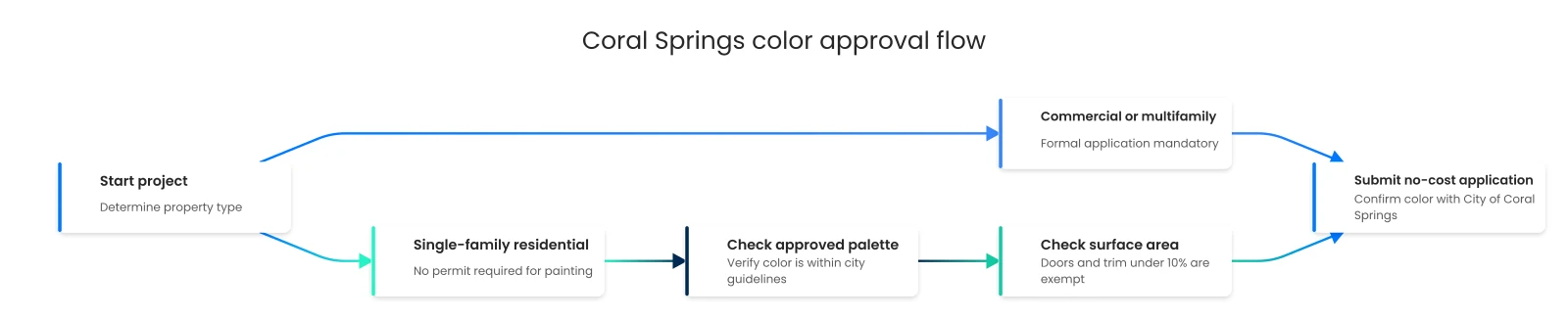
Homeowners should submit a no-cost paint application to the City of Coral Springs to ensure their color is within the approved palette, while commercial and multifamily properties require a formal application for approval. The city maintains specific color guidelines to keep neighborhoods looking consistent, and using colors outside this palette can result in a citation from the Code Compliance Department. For single-family residential properties, painting is not strictly required to have a permit, but verifying your color choice is highly encouraged to avoid penalties.
The approved palette applies to base colors, secondary colors, roofs, and accent walls. Any element comprising between 10% and 25% of the house is subject to the same standards as the main base color. However, residents may paint their front door, garage door, and trim any color they like, provided these elements comprise less than 10% of the total house surface. This flexibility allows for personal expression while maintaining the overall aesthetic of the community.
For commercial and multifamily properties, the rules are stricter. A paint application is mandatory for approval prior to painting. This ensures that business districts and apartment complexes adhere to the same visual standards as residential areas. By submitting the application before work begins, you confirm that your project complies with local regulations. This step is part of the broader permitting process for construction and alteration work in the city.
Frequently asked questions
Do I need a building permit to repaint my exterior?
General maintenance or repair work that does not change the occupancy of your home may qualify for a permit exception if the value of labor and materials does not exceed $1,500.00. Since most exterior painting projects fall under this threshold, a building permit is typically not required for standard repainting. However, if you are combining painting with other structural repairs, you should verify the total project value with the city.
Are post-storm cosmetic repairs like painting permitted without a permit?
Minor cosmetic repairs, including paint, do not require a permit. The city distinguishes between structural repairs, which need permits, and cosmetic updates that restore the appearance of the property. You can proceed with painting to fix sun fade or minor surface damage without going through the formal permitting process.
How long should I wait for the stucco to dry after cleaning?
The surface must be completely dry before repainting, with moisture content in and on the substrate not exceeding 12%. In the humid climate of Coral Springs, this can take longer than in drier regions. Always allow sufficient time for the walls to dry fully after pressure washing or rain to ensure proper paint adhesion.
Can I paint my front door a color outside the approved palette?
Yes, residents may paint their front door, garage door, and trim any color they choose. This exception applies as long as these elements comprise less than 10% of the total house surface. This allows for personalization while keeping the main body of the home within the city's approved color guidelines.
How to get an estimate
Contact PaintPro South Florida for an estimate and consultation that results in a written quote laying out the scope of work and warranty terms. The process begins with a site visit where we assess the condition of your stucco, identify any cracks or mildew, and discuss your color preferences. We provide color samples and photos that you can submit to your HOA board.
Our written quote details the scope of work, including specific prep steps like pressure washing and crack repair. It also lists the paint brand, finish, and total cost, so you know exactly what is covered before work begins. You pay a deposit before work is scheduled, and crews schedule exterior work for dry stretches and morning hours to work around the afternoon storm cycle. This approach ensures the paint cures properly and the finish lasts.
If you are ready to start, reach out to schedule your consultation. We will walk you through the options and provide the documentation you need for board submittals. Get your estimate from PaintPro South Florida.
Learn more about our exterior house painting services.