



Practical guidance for painting balcony walls that face sun and weather: choosing 100% acrylic vs elastomeric, surface prep, priming, weather windows, color choice and avoiding early peel.
Use a 100% acrylic exterior paint on sound balcony walls, or an elastomeric acrylic where stucco has hairline cracks and the wall stays dry from behind, over a cleaned, patched and primed surface. Apply it in shade, above 50°F, with no rain or dew expected for 24 hours.
Should balcony walls get 100% acrylic or elastomeric paint?
The deciding question is where moisture comes from. Elastomeric belongs on walls that shed rain, not on walls that get wet from behind, for example from a leaking slab or planter.
| Factor | 100% acrylic | Elastomeric |
|---|---|---|
| Film build | Standard film | Several times thicker |
| Crack bridging | Follows cracks | Bridges hairline cracks; resists wind-driven rain |
| Breathability | Lets vapor out of the wall | Less permeable |
| Walls wet from behind | Breathes, but fix the leak first | Keep off |
| Dark colors | Holds pigment well | Fewer dark colors available |
| Dirt pickup | Shows texture more, dirt less | Shows less texture, more dirt |
| Cost to apply and recoat | Lowest cost | Higher |
For a side-by-side look at the two coatings in Florida, compare elastomeric and acrylic stucco coatings. If you roll the wall yourself, our guide on painting walls with a roller covers nap and technique.
How do you prep balcony walls so paint lasts?
Pressure-clean, kill the mildew, scrape loose paint and patch cracks with an elastomeric patch or sealant. Prep matters this much because up to 80% of coating failures trace back to poor surface preparation.
Test the coating in a 6-inch to 12-inch radius around peeled areas so you know how far the failure reaches. Patch cracks and holes before any color goes on, and match the patch to the surrounding texture so it blends in. Rinse thoroughly and let the wall dry at least 24 hours; rushing this step hurts adhesion.
To check that the wall is dry, tape a 4-mil plastic sheet, roughly 18 inches square, over a bare patch and seal all four edges. After a minimum of 16 hours, look for moisture, discoloration or condensation on the wall or under the plastic. If moisture shows up, find and fix the source before painting. On a ground-level or canal-front wall, also wash off salt residue and treat any irrigation rust stains before priming.
Do stucco or concrete balcony walls need primer first?
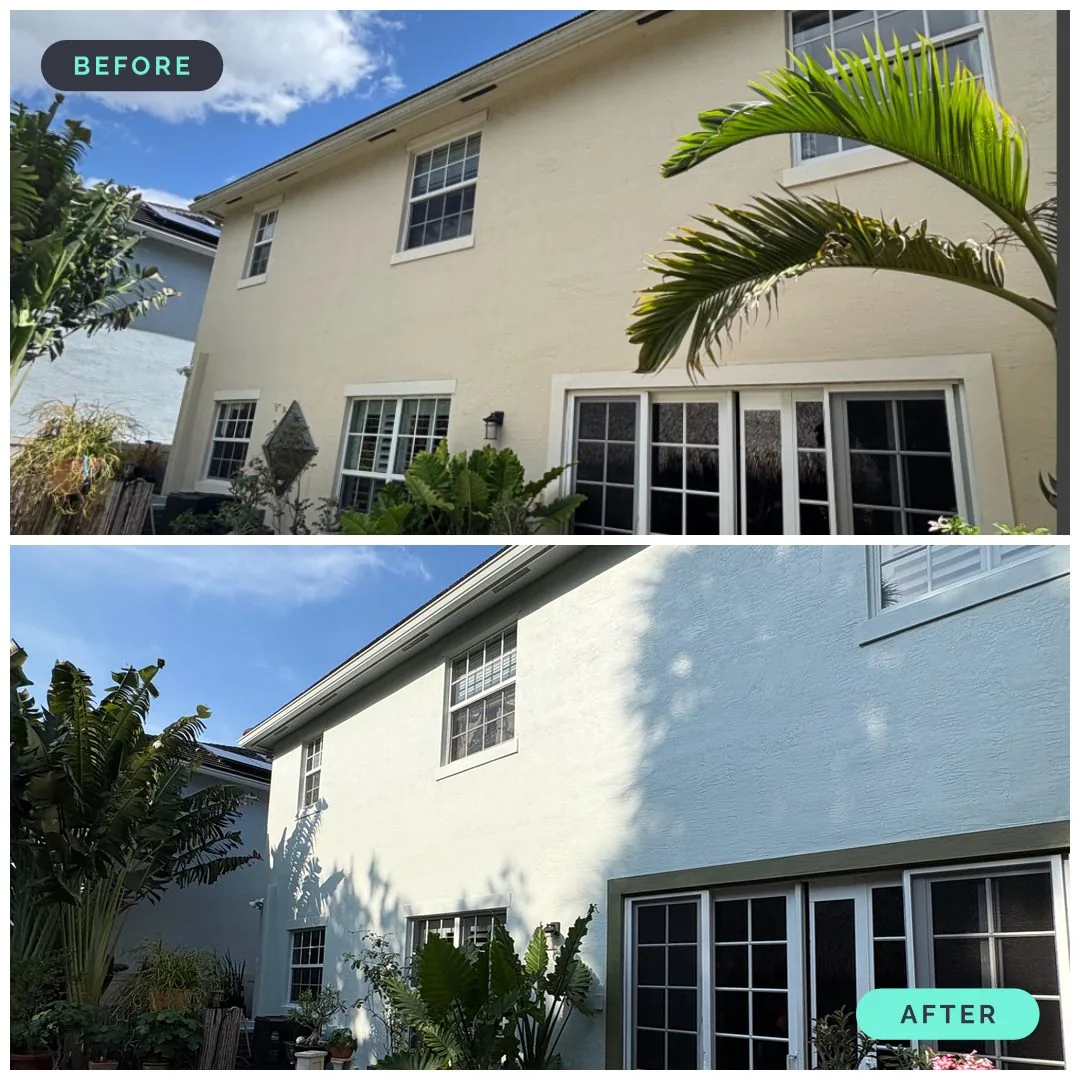
Yes. Prime bare stucco or concrete, chalky old paint and patched spots with an alkali-resistant masonry primer. Wait 30 days on new stucco; if you can't, wait at least 7 days, confirm the pH is within the primer's limit (some allow up to 13, others 10), and prime.
The reason is alkalinity. New concrete and stucco hold free water and high alkalinity that work against the film from behind, and the alkalinity of a young wall can attack the binder and burn the color out of a pigment. On a high-pH (alkaline) surface, an alkyd or oil product can fail within 6 months; a vinyl acrylic performs slightly better but will ultimately fail; an acrylic coating gives the best service.
What weather do you need to paint outside walls?
Morning shade on a dry day is the safest window, which in South Florida usually means finishing ahead of the afternoon storms.
A wall in direct sun can run 30°F or more above the air, so on an 85°F day the surface can reach 115°F (85 + 30). That is well above the 90°F top of one masonry paint's 50–90°F application range, and it causes dry spray and lap marks. Paint in shade or in the morning, and follow the sun around the building.
The go/no-go checklist for the day:
- Air, surface and material all at least 50°F during application and until cured
- Surface at least 5°F above the dew point
- No rain, fog, frost or dew on the surface, and none forecast within the product's dry-to-rain time, often 24 hours
- No painting right after a rain or in foggy weather
- Wait the recoat time on the data sheet, from 4 hours for some acrylics to 24 hours for some elastomerics at 77°F
We schedule exterior work for dry stretches and morning hours to work around the afternoon storm cycle.
Does paint color matter on a sun-baked balcony?
Yes. Darker colors build more heat on a sun-blasted wall, and a 100% acrylic holds color well under UV.
A lighter shade runs cooler in full sun, so a light acrylic is the safer pick for a balcony with all-day exposure. Elastomeric cannot hold as much pigment as 100% acrylic, so some darker colors simply are not available in that coating. Our exterior painting guide covers coastal coating choices in more depth.
If you are working through an HOA or condo board, color samples, photos and quotes can be submitted with the application, and we offer color consultations to help you choose a shade.
What makes balcony wall paint blister or peel early?
Most early failures come from painting over damp, dirty or fresh stucco, putting elastomeric on a wall that gets wet from behind, rolling onto a hot wall in direct sun, or painting over efflorescence without fixing the water source. Find and fix the moisture first, then repaint with two full coats.
Efflorescence, the white powdery salt left on masonry, is caused by water entry within the wall. If you see it, look for cracked parapet cap tiles, open joints or cracks that let water in, repair those first, and only then paint.
If you are not sure where the moisture is coming from, or the wall is peeling in several places, that is the point to bring in a crew; we work within association rules on HOA and condo properties. Our painting tips and advice blog covers more common causes.
Next step
Get an estimate from PaintPro South Florida, and we will walk the balcony with you.
Related resources
- Elastomeric vs Acrylic Paint for Stucco in Florida: Which Coating Fits Your Walls
- How to paint walls with a roller
- Exterior painting guide | Fort Lauderdale FL | PaintProFL
- Blog | PaintPro South Florida - Painting tips & advice
Learn more about our interior painting services.