


A good exterior painting job in South Florida is part curb appeal and part storm protection. Sun, humidity, and salty air can break down coatings fast. So if you’re planning exterior house painting or want to paint house exterior surfaces, the details matter more than most people expect.
This guide covers prep, paint choices, weather timing, and what to expect if you hire pros.
Step 1: Inspect your house exterior before you buy paint
Walk the full house exterior and note problem areas:
- Loose paint, peeling, or bubbling
- Open seams in trim
- Soft spots that point to rotted wood
- Rust stains on metal
- Hairline gaps and minor cracks
If you spot bare wood, don’t ignore it. It needs primer and sealing, or the new coating will fail early. Also look at doors, brick, and any exposed siding transitions.
Lead paint warning
If your home was built before 1978, assume lead paint may be present. Don’t dry-sand without proper controls. Ask a pro about safe testing and cleanup.
This isn’t just good practice—it’s federal law. The EPA’s Renovation, Repair, and Painting Rule requires that anyone paid to disturb more than 20 square feet of exterior paint on a pre-1978 home use lead-safe certified work practices, precisely because disturbed lead paint is a leading cause of childhood lead poisoning.
— Source: U.S. EPA, “Renovation, Repair and Painting Program: Contractors”
Step 2: Prep work is the make-or-break phase
In South Florida, prep is not optional. It’s the difference between a clean finish and a short-lived paint job.
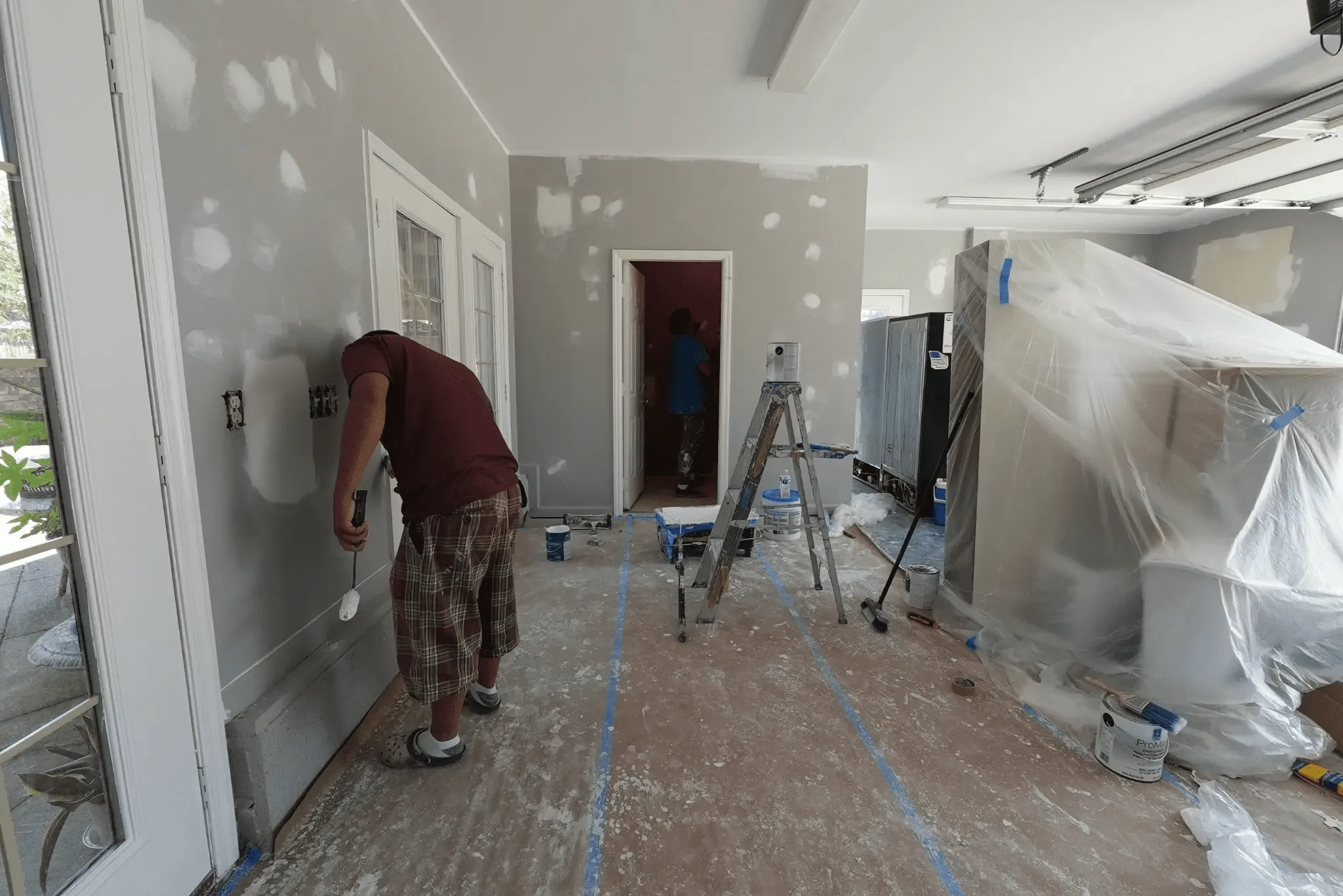
Most exterior painting project prep includes:
- Power wash to remove dirt, mildew, and chalking
- Scrape failing old paint and sand edges
- Patch and seal gaps (caulk where needed)
- Replace damaged wood sections if required
- Mask edges with painter’s tape and protect fixtures
Prep is where South Florida paint jobs actually succeed or fail—a rushed wash-and-paint job on a humid coast is the single most common reason a coating peels within a year or two.
Use drop cloths and plastic to protect walkways, plants, and windows. Pros also protect plants by wetting foliage first and covering lightly while spraying.
After washing, let the exterior dry until it is fully dry. Rushing this step hurts paint adhesion.
Step 3: Choose the right paint (brands matter less than the coating type)
The “best paint” for South Florida is usually a high quality exterior paint with strong UV resistance and mildew resistance. A cheap can may look fine on day one, then fade or peel after one tough summer.
There’s real science behind why humid, sunny climates are hard on paint. Researchers at the National Institute of Standards and Technology found that coating breakdown accelerates through what they call “moisture-enhanced photolysis”—in their tests, “both the rates and magnitudes” of this degradation increased as relative humidity rose. In plain terms: heat and UV alone are tough on a coating, but add South Florida humidity and the damage compounds.
— Source: National Institute of Standards and Technology (NIST), “Effect of Relative Humidity on Moisture-Enhanced Photolysis of Coatings”
Two brands many homeowners ask for are Sherwin-Williams and Benjamin Moore. Both offer lines designed for harsh sun and humidity. Pick the coating based on your surface and exposure, then match the brand to your budget.
A quick note on primers and oils:
- Oil based paints are not the go-to finish coat for most modern exteriors, but oil primers still have a place.
- Use the right primer on stains, metal, and exposed wood to prevent rust and lock down tannins.
If you’re unsure, bring photos to a local paint store. Ask for guidance based on your existing paint and surface type.
The can’s brand name matters less than the resistance rating printed on it—a mid-tier paint with strong UV and mildew resistance often outlasts a premium can chosen on reputation alone.
Step 4: Match paint and finish to your surfaces
Different materials need different approaches:
For exterior trim and trim, many pros use a tougher finish like semi gloss for easier cleaning and better water shedding. Walls are often satin or low-sheen. That balance helps the home exterior look crisp without highlighting flaws.
Step 5: Estimate how much paint you need (how many gallons?)
Homeowners ask “how many gallons” all the time, and it’s a smart question. It’s also tied to how much paint and how many coats you plan.
A simple rule:
- Most paints cover about 350–400 square feet per gallon per coat on a smoother exterior surface.
- Rough surfaces (stucco, textured brick) use more.
To estimate:
- Measure the wall area in square feet (length × height for each wall).
- Subtract big openings.
- Divide by coverage rate.
- Multiply by the number of coats.
Two coats isn’t upselling—in a climate this punishing, it’s the difference between a repaint that lasts years and one that needs redoing in one hard summer.
In South Florida, two coats is common for durability, even if you’re staying the same color. A single one coat refresh can work in limited cases, but it’s not the norm for long-term protection.
Step 6: Application methods that avoid lap marks
You can apply paint with a brush, roller, or spray. Many crews use paint sprayers for speed, then back-roll or back-brush for uniform texture.
Key painting tips to avoid problems:
- Avoid painting in direct sunlight on hot walls. It causes fast drying and lap marks.
- Work in shade and follow the sun around the house.
- Keep a wet edge as you paint each section.
- Spot prime repairs so sheen and color match.
There’s a reason “avoid direct sunlight on hot walls” is repeated on every South Florida job. According to the EPA’s UV Index scale, a reading of 8 or higher means “very high to extreme” risk—levels South Florida sees for much of the year—and that same intense UV is exactly what causes fast-drying paint, lap marks, and premature fading on exterior walls.
— Source: U.S. EPA, “UV Index Scale”
Also plan access. A two-story home with tight landscaping or steep grade can make the job more time consuming.
Step 7: Timeline and cost in Fort Lauderdale (what’s realistic)
Most exterior paint jobs take several days once prep starts. For an average home, plan on:
- 1 day for washing and drying time (weather dependent)
- 1–2 days for scraping, repairs, and masking
- 1–2 days for painting and detail work
- Time for touch-ups and cleanup
Cost varies by size, surface condition, stories, and how much prep is needed. Generally speaking, a professional exterior repaint in the Fort Lauderdale area can range widely (often several thousand dollars to well over ten thousand). The only accurate number comes from an on-site quote.
DIY vs professional painting in South Florida
DIY can save money if the home is single-story and in good shape. But exterior work brings ladders, sun exposure, surface repairs, and moisture timing. Professional painters also bring the right tools, safe setup, and systems that hold up longer.
If you do hire help, ask how they handle prep, drying time, and product selection. Those choices drive quality more than the label on the can.
“At PaintProFL, we tell every South Florida homeowner the same thing: this climate doesn’t forgive shortcuts. Full prep, the right primer for the surface, and two coats of a paint built for UV and humidity—that’s what actually holds up here, not the name on the can.”
— The team at PaintProFL
Ready to get your exterior repainted the right way? Schedule your free estimate with PaintProFL or call 754-218-9744.
FAQs (10)
1) What’s the best time of year for exterior painting in South Florida?
Aim for stretches with lower rain risk and manageable humidity. You want predictable drying and cure time.
Avoid weeks with daily storms. Rain on fresh paint can ruin the finish.
2) How do I prepare my home exterior before painting the exterior?
Start with a wash or power wash, then remove loose paint, sand edges, and repair damaged areas. Seal gaps and protect plants and fixtures.
A clean, dry surface is the foundation for good paint adhesion.
3) Do I need two coats, or is one coat enough?
Two coats is the safer standard for durability, color depth, and even coverage. One coat can work only when the surface is stable, the color change is minimal, and coverage is strong.
If your home gets harsh sun or wind-driven rain, two coats is usually worth it.
4) How many gallons of paint do I need for a house exterior?
Use the coverage rule (about 350–400 sq ft per gallon per coat) and adjust for rough surfaces. Then multiply by coats.
If you’re unsure, measure and ask a paint store to sanity-check the math before you buy.
5) Can you paint aluminum siding in South Florida?
Yes, aluminum siding can be painted, but prep matters. Clean thoroughly, remove chalking, and use the right primer to ensure adhesion.
Skipping primer on metal can lead to early peeling and flashing.
6) Is Benjamin Moore or Sherwin-Williams better for exterior paint jobs?
Both Benjamin Moore and Sherwin-Williams make strong exterior lines. The better choice depends on which product line matches your surface, sun exposure, and budget.
More important than brand is using a high quality exterior paint and the correct primer system.
7) What finish should I use for exterior trim and doors?
For exterior trim and doors, semi gloss is common because it sheds water and cleans easily. It also makes details pop.
Walls are often satin or low-sheen for a balanced look.
8) What should I do if I suspect lead paint?
Don’t sand or scrape aggressively until you confirm risk. Homes built before 1978 may have lead paint, and dust control is critical.
A qualified contractor can test and follow safe containment and cleanup practices.
9) Why do I get lap marks when I paint house exterior walls?
Lap marks happen when paint dries too fast and you overlap partially dried sections. Direct sunlight, heat, and wind make this worse.
Paint in shade, keep a wet edge, and work in smaller sections to control drying.
10) Should I DIY or hire professional painters?
DIY can work for small, accessible homes with minimal repairs. But multi-story homes, heavy prep, and tight weather windows often favor pros.
Professional painters reduce risk, speed up the job, and usually deliver more consistent quality and durability.
Curious what your home would need? See how we handle color and finish in our guide on how to paint a front door, or schedule your free estimate and let our team walk your property in person.