



Learn how to confirm that stucco, block, concrete and metal are clean, dry and sound before a commercial exterior gets its first coat. Includes a substrate-by-substrate readiness table and tips for reviewing a prep scope.
A commercial exterior is ready to coat when each surface on it is clean, dry, sound and chemically ready for the product going on. The method changes with the substrate, the exposure and how long the coating needs to last. Up to 80% of coating failures come from inadequate surface preparation, according to Sherwin-Williams' surface preparation guidance. On a typical South Florida building, prep means pressure-cleaning, treating mildew, filling cracks, scraping loose paint and priming chalky stucco. Concrete also needs checks for cure, pH and moisture.
Our scope and prep post for commercial exteriors in Fort Lauderdale walks through the full project. This page covers a narrower question: how to confirm each surface will hold a coat before anyone opens a bucket.
How prep changes for stucco, block, concrete and metal
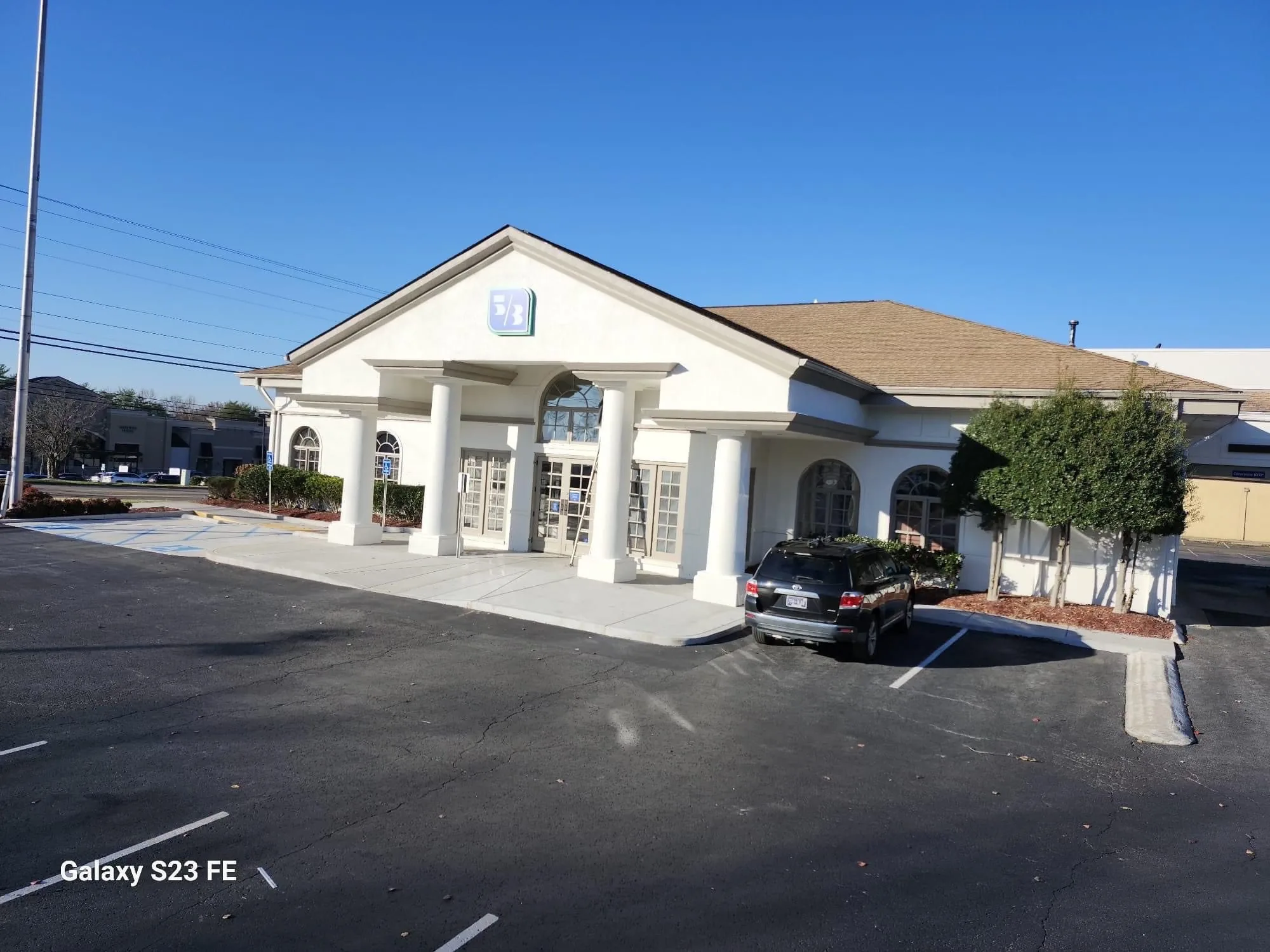
Most commercial buildings mix materials. You might have stucco on the street walls, block on the service side, a tilt-up concrete panel at the loading dock, and galvanized or steel railings, doors and canopies. Each one gets its own cleaning method and its own readiness check.
| Substrate | What has to come off or be fixed | Readiness check | Clear to coat when |
|---|---|---|---|
| Stucco | Chalk, dirt, mildew, loose paint, cracks | Palm wipe for chalk; hardness; pH on new stucco | Wipes clean after washing and drying; new stucco is hard, dry and under pH 13 for a masonry primer such as Loxon |
| Poured and tilt-up concrete | Dirt, grease, laitance, loose material; bug holes and voids filled with cement patch | Cure age, pH, moisture, texture | Aged 30 days at 75°F or warmer; pH 6 to 9; dry; feels like medium-grit sandpaper |
| Block | Dirt, grease, loose material | pH, moisture, cleanliness | pH 6 to 9; clean; dry |
| Galvanized metal | Factory oils and surface contaminants | Age of the metal | Weathered at least 6 months; newer metal degreased with a water-soluble cleaner, then primed |
| Steel | Oil, grease, soil, loose rust and loose paint | Visual check after solvent cleaning | No visible oil, grease or soil left; primed |
Laitance is the weak, powdery skin that forms on top of concrete as it cures. Paint applied over it comes off when the laitance does. Bug holes are the small air pockets on the face of poured concrete. On tilt-up and poured walls, commercial detergents or abrasive blasting may be needed to get down to a sound surface.
For metal, the standard most specs cite is SSPC-SP 1, a solvent-cleaning method from the Steel Structures Painting Council. Despite the name, the "solvent" is often steam or an alkaline or water-based cleaner. It's safer to use the mildest product that removes the contamination.
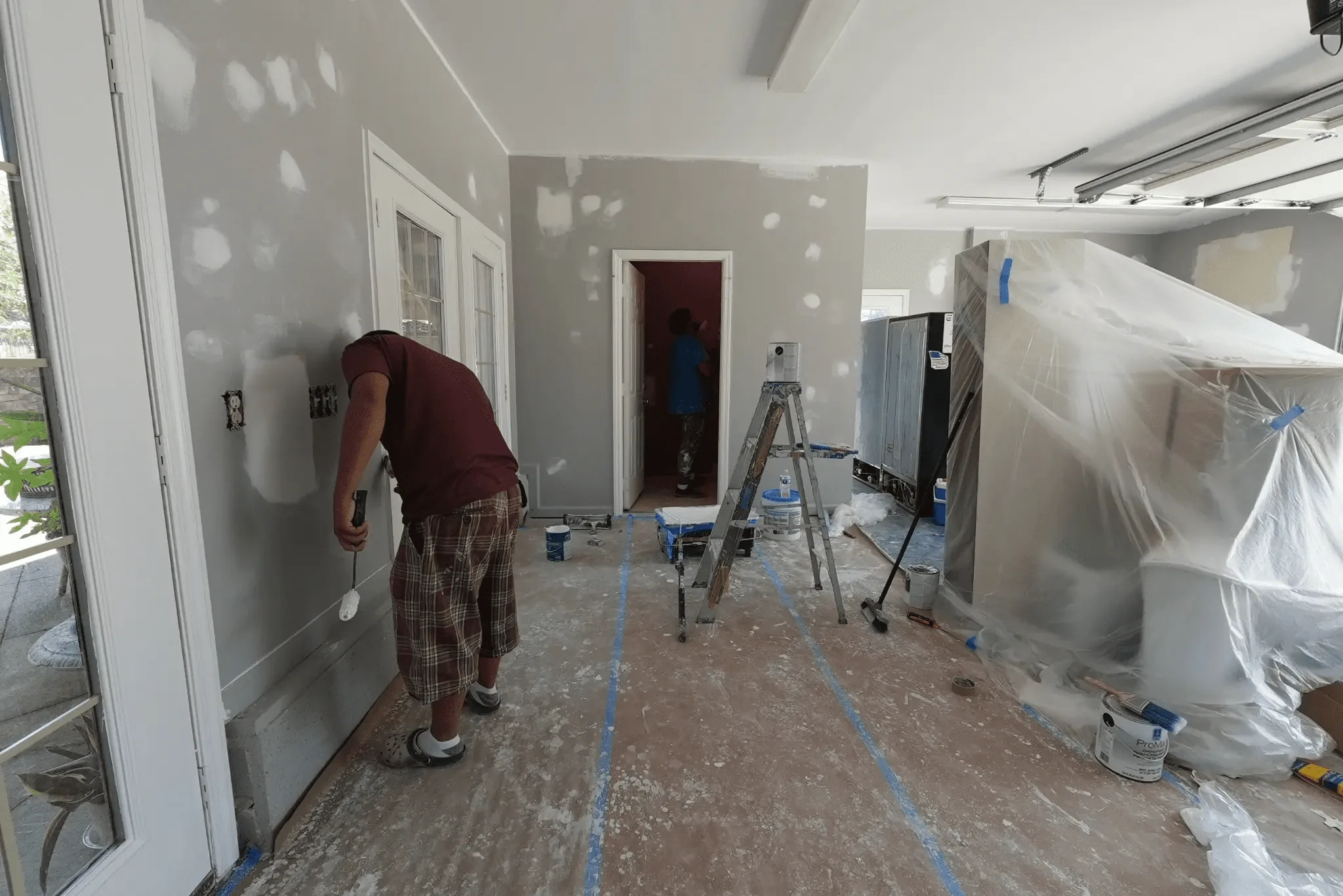
On stucco, our crews pressure-clean, treat mildew, fill cracks, scrape loose paint and prime the chalky areas. Our stucco painting guide goes further into cracks and coating choice.
How to tell a surface is ready to coat
Start with your palm on the stucco. If it comes away white, the wall is still chalking. Chalk is a fine powder that weathered paint and stucco shed, and a topcoat over it bonds to the powder, which then lets go. Washing with a pressure washer and a detergent injection system removes it. After the wall dries, a primer gives the topcoat a uniform, sealed surface to grip.
New stucco used to need one to two months before painting. With current masonry primers, it can be primed as soon as it is hard, dry and under pH 13.
Poured and tilt-up concrete have tighter limits. The wall needs 30 days of aging at a material temperature of at least 75°F, a surface pH between 6 and 9, and a texture like medium-grit sandpaper. Block skips the cure wait, but it still has to pass the pH, cleanliness and dryness checks. Dryness is checked with the plastic-sheet method in ASTM D4263. You tape plastic tight to the surface, wait, then lift it and look for darkening or condensation underneath. Sherwin-Williams' floor version uses a 2-by-2-foot piece of 4-mil plastic left for 24 hours. On walls the same sheet test applies, and in high humidity it makes sense to leave the sheet on longer rather than shorter.
Pressure figures also differ between specs, depending on the job. A minimum of 2,100 psi is the figure for cleaning masonry and concrete. A second spec, 2,000 to 2,500 psi at 4 to 14 gallons per minute, describes water cleaning that removes loose rust, loose mill scale and loose paint, so it is written mainly for steel. Water volume matters as much as pressure, because the flow carries debris off the wall.
What comes off on a repaint, and what can stay
A maintenance repaint rarely requires stripping every old coat. Old paint that is still holding tight can stay, but everything else on the surface has to go so the new paint bonds to it. That includes oil, grease, loose paint, rust, mold, mildew, mortar, efflorescence and old sealers. Efflorescence is the white mineral crust that water pushes out of masonry. If old paint stays put when we scrape it and run the washer over it, it can be painted over.
Mildew needs a treatment to kill it, because rinsing alone leaves it to regrow under the new coat. A common mix is one quart of household bleach to three quarts of water, applied and then rinsed off. Never add detergent or ammonia to that mix. We check shaded, low-airflow spots first, such as loading docks, breezeways and north-facing walls.
Irrigation rust is different. Sprinklers that hit the base of a wall leave rust-colored stains. If the head keeps spraying the wall, new paint will stain again, so the head needs adjusting and the stain needs treating. Our post on sprinkler rust stains on stucco covers the treatment. Buildings on canals or near the coast also take salt spray and splash, and we give those elevations extra cleaning before any primer goes on.
Weather windows and keeping the business open
Exterior coatings shouldn't go on right after rain, in fog, when rain is forecast, or under 50°F unless the product is rated for colder weather. In South Florida the 50°F limit rarely comes into play. The afternoon storms do, so we schedule exterior work for dry stretches and morning hours.
After pressure-cleaning, the surface has to dry thoroughly before primer goes on, and Sherwin-Williams suggests allowing a day or so after washing a chalky surface. We wash on one day and prime on a later dry morning. Our guide to timing exterior painting in Fort Lauderdale covers the seasonal side.
If the building needs to stay open, we can run commercial crews on nights and weekends. Occupied apartment buildings also need resident notices and balcony access, which our apartment repaint plan lays out.
What should the prep scope say before you sign?
A written proposal should name the prep for each substrate, the primer, the number of coats and the timeline. A phrase like "prep as needed" gives you nothing to hold the contractor to and nothing to compare against another bid. Check that the scope says whether cracks get filled, mildew gets treated and chalky stucco gets primed. For concrete and metal, look for the cure, pH, moisture and cleaning standard.
On our walk-throughs we inspect the building, note surface condition and repairs, and write each of those items into the proposal. When you request a commercial painting estimate, point out the block walls, dock panels and metal so each one gets its own line in the scope. We work across the Fort Lauderdale metro, from Hollywood north to Boca Raton, and our Boca Raton service-area page covers exterior painting there.
Related resources
- Commercial Exterior Painting in Fort Lauderdale: Scope and Prep
- Stucco Painting in South Florida: Prep, Coatings and Cracks
- Sprinkler Rust Stains on Stucco: What to Do Before You Paint
- Best Time for Exterior Painting in Fort Lauderdale, FL
- Apartment Repaint in Fort Lauderdale: Commercial Painting Plan
- Commercial painting Fort Lauderdale, FL | PaintPro South Florida
- Exterior house painting in Boca Raton, FL | PaintPro