

Learn how Florida sun, heat and salt air break down exterior paint, which coatings and colors resist fading and chalking, and what prep and checks help a paint job last.
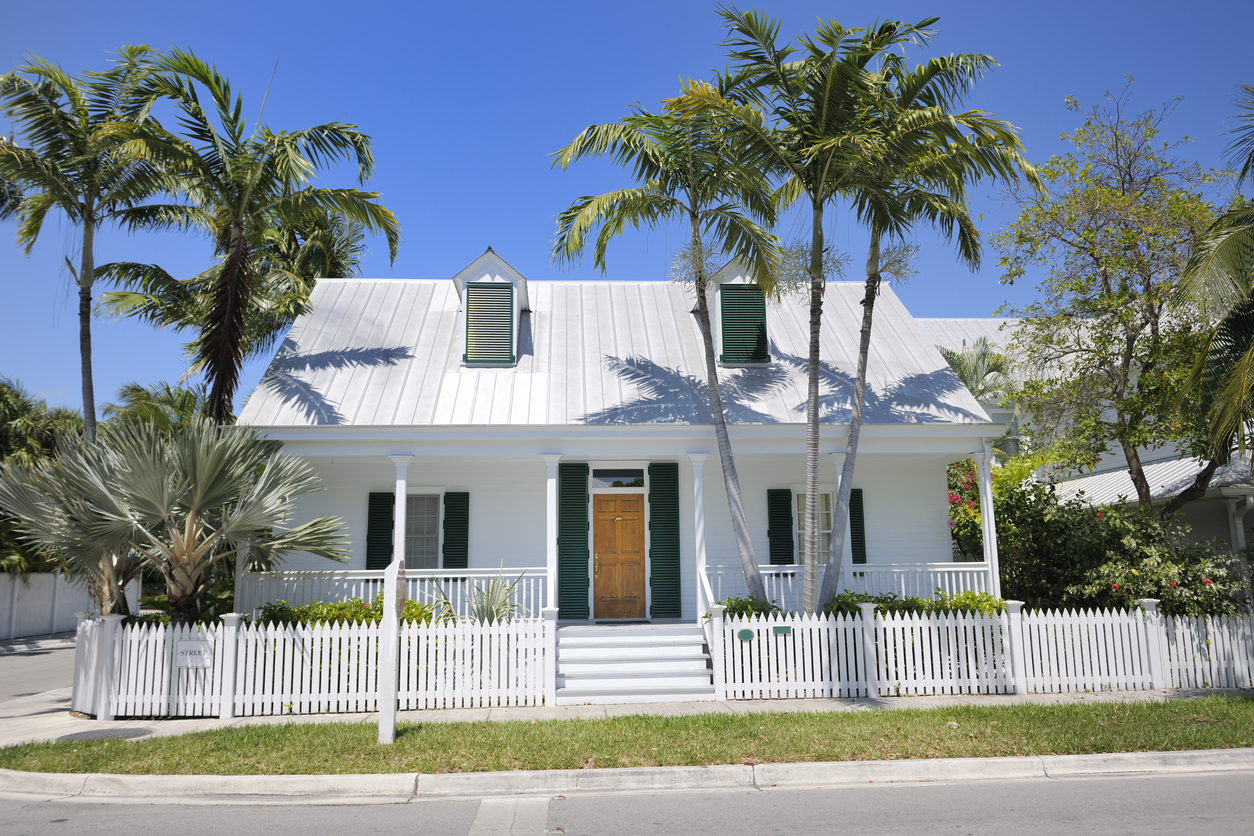
UV protection for painted surfaces in Florida starts with understanding that sun, heat, humidity and salt air break down the resin that holds a paint film together, and that shows up as fading, chalking and cracking. The best protection is generally a quality 100% acrylic or elastomeric system over a pressure-cleaned, primed surface, in a fade-resistant color on the walls that take the most sun.
How does Florida sun break down exterior paint?
UV light starts a chemical reaction in the binder and pigment, and heat and moisture speed it up. The American Coatings Association explains that UV radiation and water can chemically degrade these components, and that the reactions often accelerate when the temperature rises.
Building Science Corporation adds that the combination of UV, moisture and heat is much more severe than any one alone. When the resin breaks down, pigment washes off the surface and fading follows. A west wall in July gets all three at once, every day.
What are fading, chalking and cracking?
Fading is pigment loss, chalking is resin turning to powder, and cracking comes from a film that has gone brittle or was applied too thick. Sherwin-Williams' coatings research says color fades when pigments break down. Chalking is a degradation of the resin at the surface, mostly from UV, and the loose particles take on a white look. That white powder can be scrubbed off.
Cracking has a few causes. The National Research Council of Canada's study on paint weathering notes that a film applied too thin erodes fast, while one that is unduly thick can crack. Layers that swell differently when wet can also build stress and cause cracking and scaling.
Why does Florida age paint faster?
Strong sun, humidity and salt air all hit at once, and the combination is worse than any one factor. Sherwin-Williams' weathering research calls Florida an excellent place to test coatings because of its high humidity, strong sun and salty air. That is also why a lifespan printed on a can, often tested elsewhere, is a poor guide for a Fort Lauderdale wall.
Which paint types resist UV best?
Fluoropolymer resists chalking best, but it is an industrial coating. Sherwin-Williams says its Fluropon finish uses 70% PVDF resin, and the carbon-fluorine bond gives it stubborn resistance to chalking and erosion. For homes, the practical choices are quality 100% acrylic or elastomeric.
Dunn-Edwards points out that paying $5 more per gallon for quality paint costs the owner less because the paint lasts longer. It also warns that some makers sell a "100% acrylic" that lacks the performance you expect from one, so check the product data sheet.
| Coating | Best fit | What the evidence supports |
|---|---|---|
| 100% acrylic | Sound walls | Suits sound stucco |
| Elastomeric | Walls with fine cracking | Thicker and stretchier |
| Silicone | Ask for a data sheet | No UV data available |
| Fluoropolymer | Industrial and metal | Strong chalk and erosion resistance |
Where does elastomeric fit, and what about silicone?
Elastomeric suits walls with fine cracking, but it will not hide poor prep. It is thicker and stretches more than standard acrylic. A thick film over dirt or unprimed chalk still fails. If you are weighing it for a specific wall, the post on elastomeric coating on stucco covers fit in more detail.
If a silicone product is pitched to you, ask for the manufacturer data sheet and compare its fade and chalk claims with an acrylic option.
Which colors fade fastest?
Bright yellows, oranges and reds fade fastest, along with anything built on organic pigments. Sherwin-Williams notes that certain colors are more affected by the environment than others, especially those bright colors, and recommends considering UV exposure when choosing.
Organic pigments are carbon based, have low resistance to fade and heat, and let UV and oxygen break their chemical bonds. Inorganic pigments, made from mineral compounds such as metal oxides, hold color far better. On west and south walls, ask which pigment type is in your color, and lean toward muted or earth tones if the paint maker confirms they are inorganic.
What prep does sun-damaged or chalky stucco need?
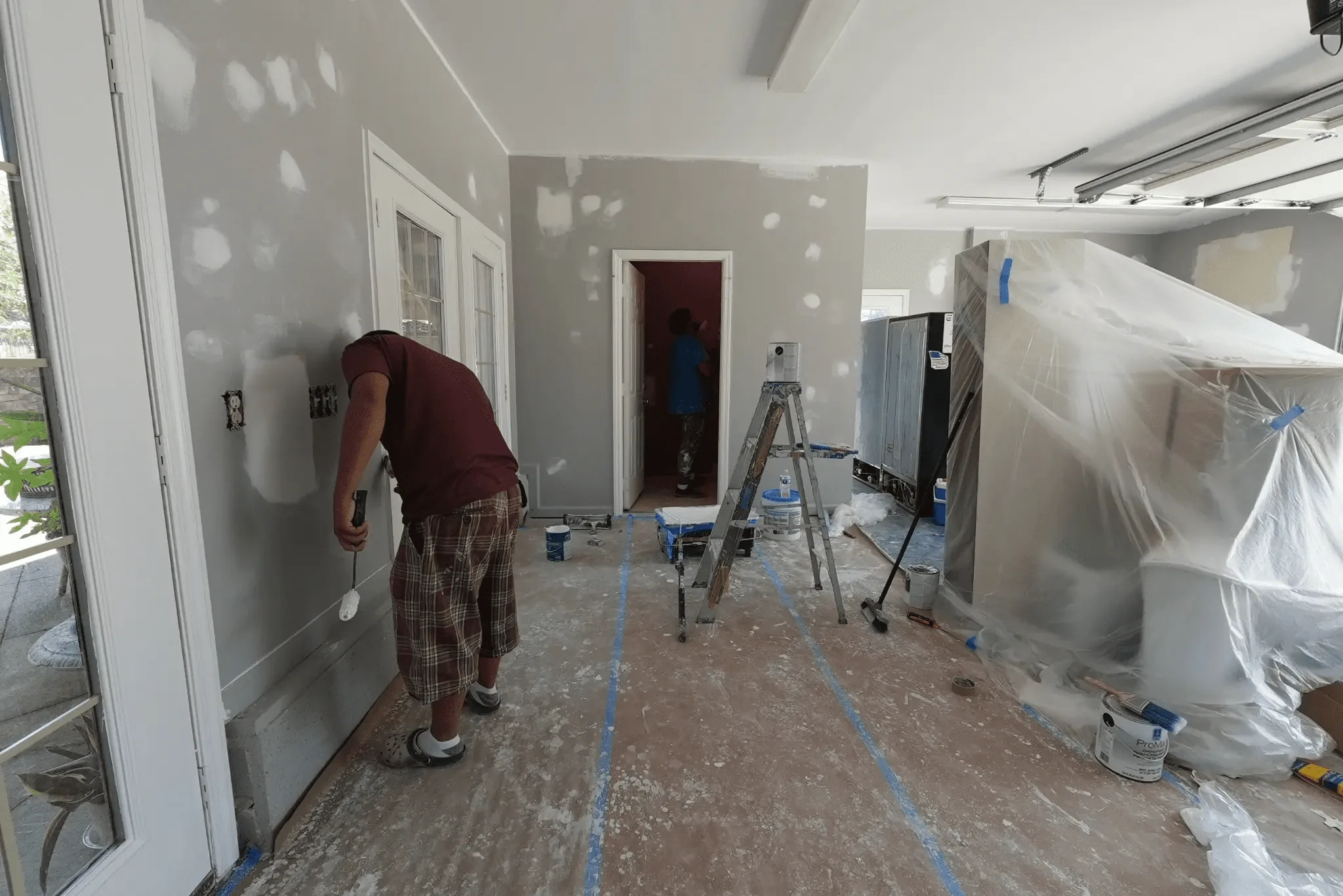
Pressure-clean, treat mildew, fill cracks, scrape loose paint, then prime before the finish coat. Stucco is porous, so dirt, mildew or chalk left on it ends up between the wall and the new paint. Paint over chalk bonds to the powder, not the wall.
Priming gives the new coat something sound to grip. Exterior work also goes better scheduled for dry stretches and morning hours, around the afternoon storm cycle. For crack work, see the stucco painting guide.
How do you know paint is failing from sun?
Look for powder on your hand, a dull flat finish, fine cracks and thin color on west and south walls. Run your palm across the wall. If white or colored powder comes off, the surface resin has weathered. The usual decline runs from soiling and loss of gloss to chalking, then fissures and, finally, break-up.
- Dull but clean: early stage; watch it.
- Chalk on your hand: clean and prime before recoating.
- Fine cracks or bare-looking texture: repaint soon, since the binder is washing away.
Dark or green staining in shade is usually mildew, not sun. Rust-colored streaks near sprinklers are irrigation staining. The mildew diagnosis post shows how to tell these apart.
How often should you repaint in Florida?
No fixed Florida interval is documented, so judge by condition and exposure. The American Coatings Association notes that a coating that performs acceptably after five years of Florida exposure says nothing about its performance at 5.5 or 10 years.
Check each elevation separately. West and south walls take the most sun and usually show wear first. If a wall shows chalk, a flat finish or fine cracking, schedule an assessment rather than waiting for a calendar date. For sun-facing walls, we coat with a system rated for fade and chalk, and our crews pressure-clean, treat mildew, fill cracks and prime before color. Exterior painters in Hollywood, FL can inspect your walls, and the cabinet painting cost post shows what drives a quote.